
This is a therapeutic option for shoulder arthritis that is also accompanied by rotator cuff problems.
Call us for the Help!
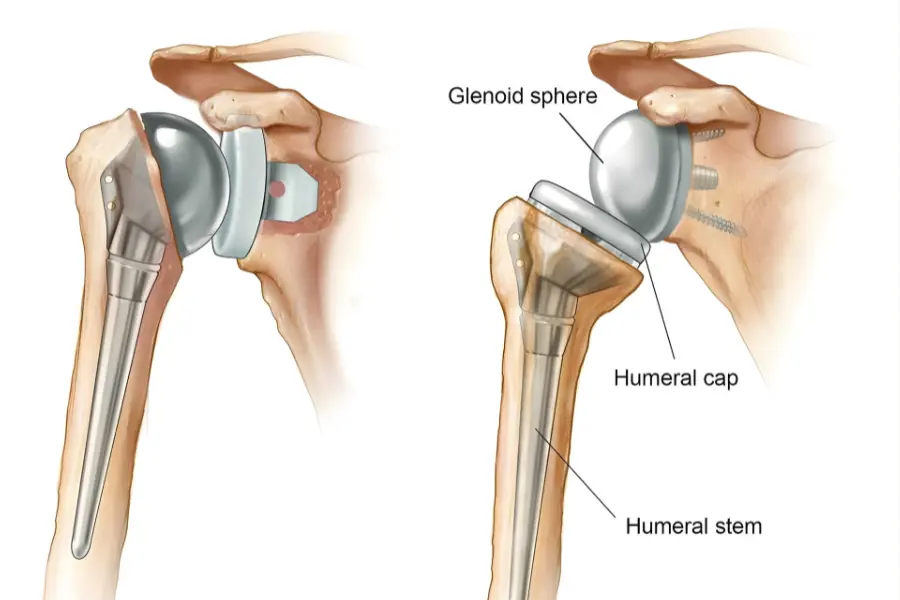
This is a therapeutic option for shoulder arthritis that is also accompanied by rotator cuff problems. Traditional surgical therapy options for shoulder arthritis included a variety of procedures, but none of them could be used with a rotator cuff tear.
The glenoid cavity of the scapula, which is one-fourth of the circular labrum, is a ball and socket type of joint with more mobility and less stability. The rotator cuff, a group of four muscles, is largely responsible for the joint’s strength.
The shoulder, like the rest of the joint, is subjected to wear and strain over time, resulting in shoulder arthritis. Any injury to the joint, which is prevalent in sports, could put you at risk for both rotator cuff pathology and arthritis. An artificial joint replaces the head of the humerus and the glenoid cavity of the scapula in early shoulder replacement operations. The replacement is prone to fail and malfunction if the shoulder joint muscles that offer stability to the joint are also injured. Reverse Shoulder Replacement Surgery is recommended in specific circumstances, such as when there is a fracture around the shoulder joint or when the bones are too weak to hold an implant. The majority of this process is pre-planned.
How is Reverse Shoulder Replacement surgery performed?
Post-Surgical Observation is mostly for 2-3 days. Prognosis is excellent, 91% of reverse shoulder replacements last at least 10 years. A complication rate of 15-40% is attached to this procedure too.
Our Treatment Process
Introduction & Connection
Assessment & Treatment Planning
Treatment & Recovery
Review & Ongoing Support
Why Choose Us?
Are you having ortho problems? Contact us today!
Contact With Us
Call us: +91 90032 22747