
Shoulder bursitis (subacromial bursitis) is a condition in which a fluid-filled sac termed the “subacromial bursa” swells. It’s located between the “acromion,” a bony projection in the shoulder, and the rotator cuff.
Call us for the Help!
Shoulder Impingement / Subacromial Bursitis
Excessive shoulder usage is the most common cause of this ailment. For example, Painting and construction jobs, because they need repetitive overhead motions. The bursa is irritated by these motions and becomes inflamed as a result.
Rest, anti-inflammatory medicines, cortisone injections, and physical therapy are all possible treatments. Shoulder surgery may be required to create space in the shoulder joint if those approaches do not improve the symptoms.
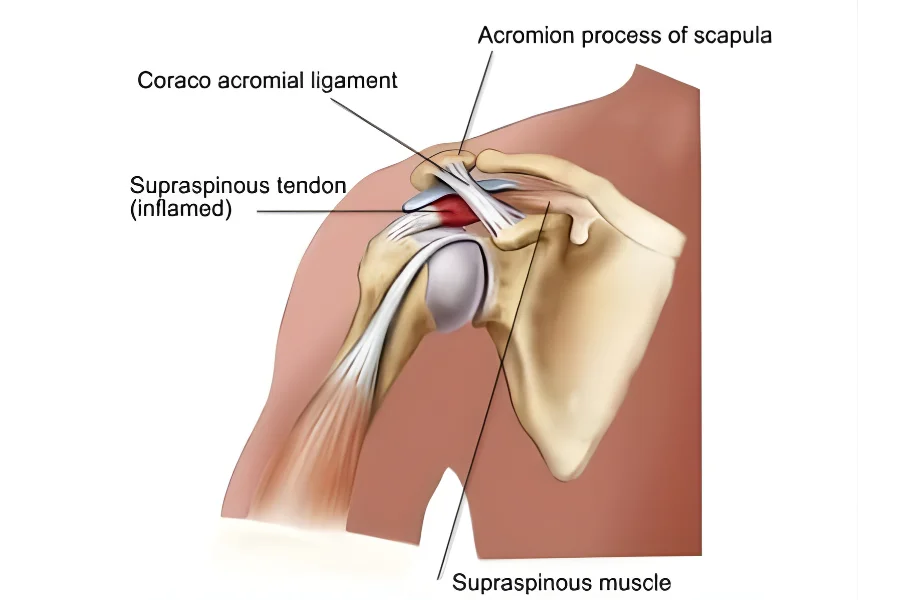
Shoulder impingement occurs when the tendons of the rotator cuff or the bursa become compressed as they pass through the narrow space beneath the acromion, the top part of the shoulder blade. This compression leads to irritation, inflammation, and pain, especially with overhead movements. Many people first notice discomfort when reaching, lifting, or performing activities like throwing, swimming, or even putting on a jacket. Night pain—particularly when lying on the affected shoulder—is also common.
The condition often develops from repetitive overhead activity, poor shoulder mechanics, posture issues, or age-related tendon changes. Early symptoms may feel like a dull ache, but without treatment, weakness or limited range of motion can progress. Diagnosis is usually made through a physical exam, and imaging like X-rays or ultrasound may be used to rule out other causes.
Most cases improve without surgery. Treatment focuses on reducing inflammation and restoring healthy shoulder movement. This may include physical therapy to strengthen the rotator cuff and shoulder blade muscles, anti-inflammatory medications, activity modification, and sometimes a corticosteroid injection for pain relief. Surgery is considered only when symptoms don’t improve over time.
With proper care, most people regain full motion, strength, and comfort, allowing them to return to daily activities and sports.
Our Treatment Process
Introduction & Connection
Assessment & Treatment Planning
Treatment & Recovery
Review & Ongoing Support
FAQ
1. What causes shoulder pain?
2. When should I see a doctor for shoulder pain?
3. Why does my shoulder hurt at night?
4. Can shoulder pain be treated without surgery?
5. How is shoulder pain diagnosed?
Why Choose Us?
Are you having ortho problems? Contact us today!
Contact With Us
Call us: +91 90032 22747