
Tennis elbow is an inflammatory disorder of the tendons on the outside of the elbow known as the external carpi radialis brevis.
Call us for the Help!
+91 90032 22747
Tennis Elbow
The tendons that connect the forearm muscles are in charge of bending the wrist backward in the opposite direction as the palm. The swelling is caused by micro-tears in the tendons and forearm muscles, resulting in pain in the outer elbow. The medical condition is called as lateral epicondylitis in clinical terms.
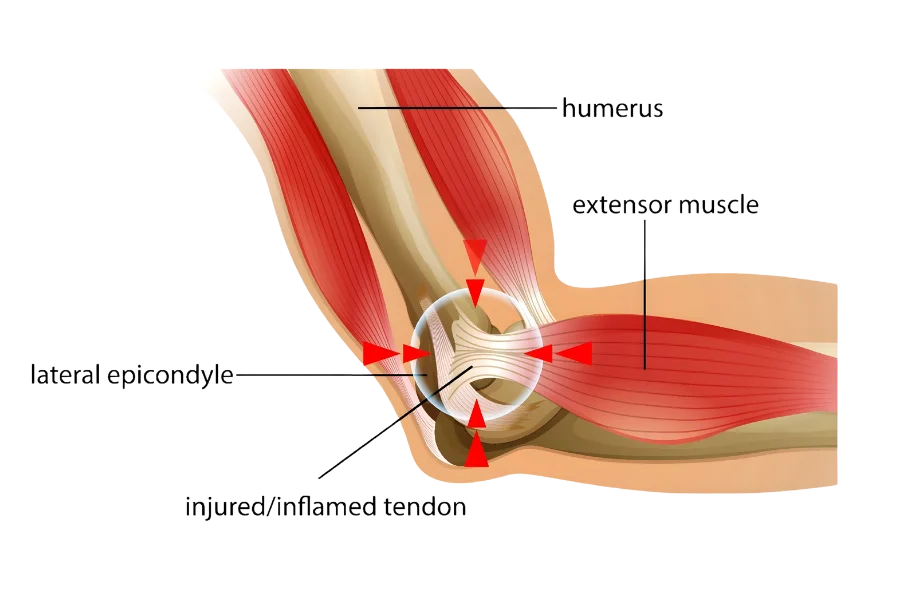
Symptoms:
Tennis elbow is marked by pain, ache, or burning sensation of the forearm and elbow at following instances
Bending and stretching the affected arm
Lifting a heavy object
Trying to grip objects like coffee mug, pen, etc.
A weak grip while holding objects
Opening a jar, turning the doorknob and other similar hand movements
Placing arm or hand on a table or other similar flat surfaces and then trying to lift the arm against resistance
Treatments:
Only if the issue does not improve after 6 to 12 months despite continuing treatment may arthroscopic surgery be required (s). In such circumstances, the injured tissue may be removed using a non-operative method. As arthroscopic portal surgery is followed by rehabilitation activities for a quick recovery, it can be performed by one big incision or multiple minor incisions. Surgery, on the other hand, is only required in a small percentage of instances.
Our Treatment Process
1
Introduction & Connection
We begin with a friendly discussion to understand your medical needs and build a foundation of trust for your treatment journey.
2
Assessment & Treatment Planning
Our experts evaluate your reports and design a personalized treatment plan with complete travel and visa support.
3
Treatment & Recovery
You’ll receive advanced medical care and guided rehabilitation for a smooth, safe, and speedy recovery.
4
Review & Ongoing Support
We continue to monitor your progress through online follow-ups, ensuring long-term health and comfort.
FAQ
1. What causes shoulder pain?
Shoulder pain can come from many issues, including rotator cuff injuries, tendonitis, arthritis, bursitis, frozen shoulder, labral tears, and joint instability. Sometimes pain also comes from the neck.
2. When should I see a doctor for shoulder pain?
You should seek medical care if pain lasts more than a few days, keeps you from lifting your arm, causes night pain, follows an injury or fall, or if there is swelling, weakness, numbness, or a visible deformity.1
3. Why does my shoulder hurt at night?
Night pain is common with rotator cuff inflammation or tears. When lying on the affected shoulder, pressure increases irritation, making the pain worse.
4. Can shoulder pain be treated without surgery?
Yes. Most shoulder conditions improve with rest, physical therapy, medications, injections, and activity modification. Surgery is usually considered only if symptoms don’t improve or if an injury is severe.
5. How is shoulder pain diagnosed?
Your provider may use a physical exam, X-rays, ultrasound, or MRI to understand the cause of the pain and guide treatment.
Why Choose Us?
Experienced Surgeons
Excellent outcomes
Best orthopaedics
History of Caring
Are you having ortho problems? Contact us today!
Contact With Us
Mail us: info@primeshoulder.com
Call us: +91 90032 22747
Call us: +91 90032 22747
Working Time
Mon - Sat :
9:00am - 9:00pm